
DevOps
AI-Native SDLC: Why the Real Bottleneck Isn't Writing Code Anymore (Planning, Testing, Governance & Deployment in 2026)
AI writes code faster than teams can review, approve and ship it. Where the real bottleneck moved in the AI-native SDLC, and what engineers should learn.
In an AI-native SDLC, code is no longer the bottleneck. Anthropic used that exact phrase as a section heading in The AI-Native SDLC Playbook, published 21 August 2026, and the constraint it describes has moved somewhere less comfortable: planning, testing, governance and deployment. Those stages still run at human speed. Generation does not. If your pull request queue got longer after your team adopted AI coding tools, that gap is the reason.
Where the bottleneck actually went
Anthropic has an obvious interest in describing a world its own tools serve, so treat the claim as a hypothesis and check it against someone else’s data. GitLab’s AI Accountability Report, run with The Harris Poll across 1,528 developers and technology buyers in six countries and published on 23 June 2026, found that 85% agree AI has shifted the bottleneck from writing code to reviewing and validating it. That is a survey of practitioners, not a vendor describing its own workflow, and it lands on the same conclusion.
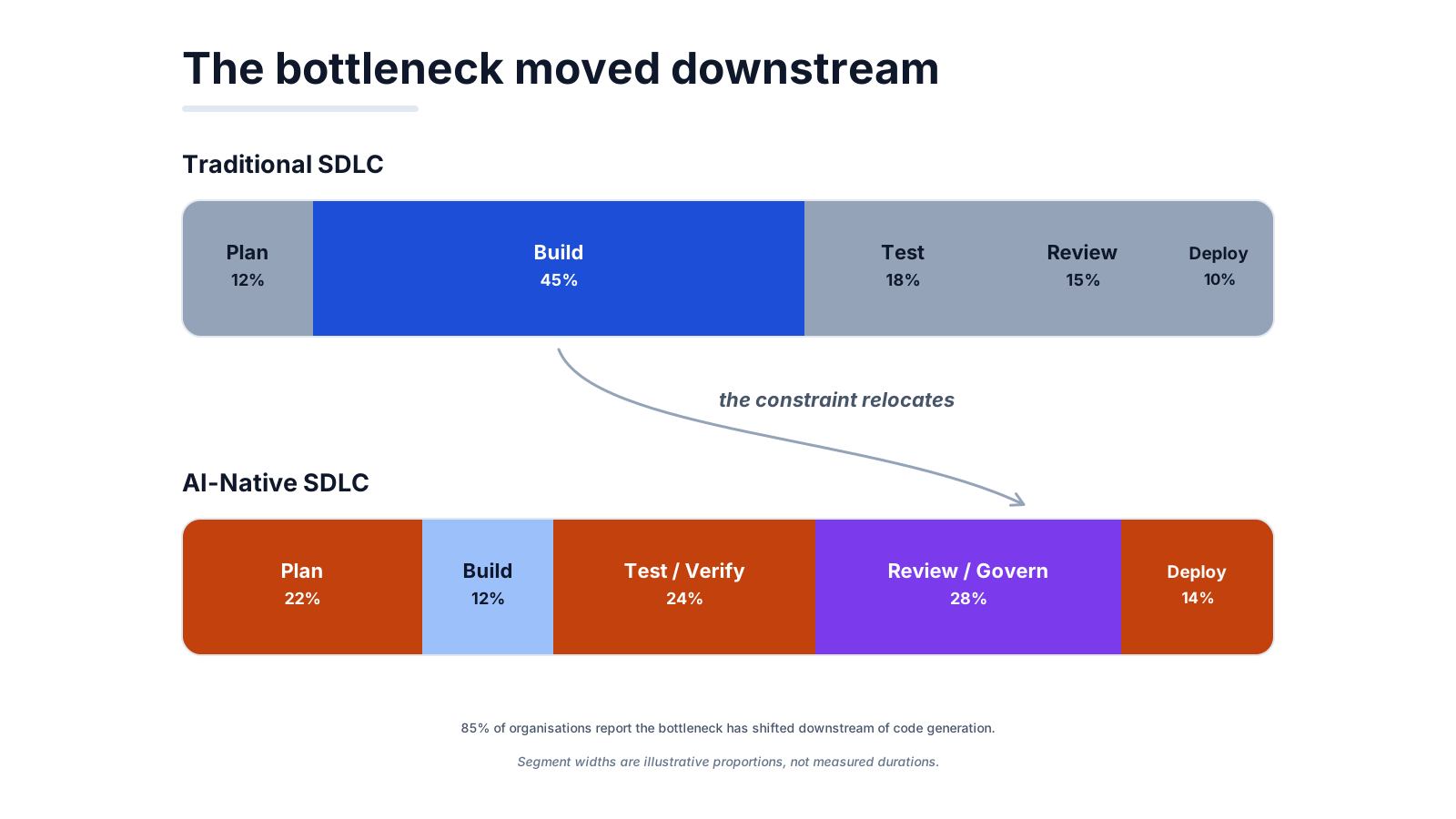
Be precise about scale. In Anthropic’s own codebase — not the industry’s — Claude authors about 80% of merged code, according to Deputy CISO Jason Clinton, writing in July 2026. That is one company’s internal number. What travels is the mechanism rather than the percentage: Anthropic’s share of PRs receiving substantive review comments climbed from 16% to 54%. Generation got cheap. Everything downstream of generation did not.
The four stages that now decide your delivery speed
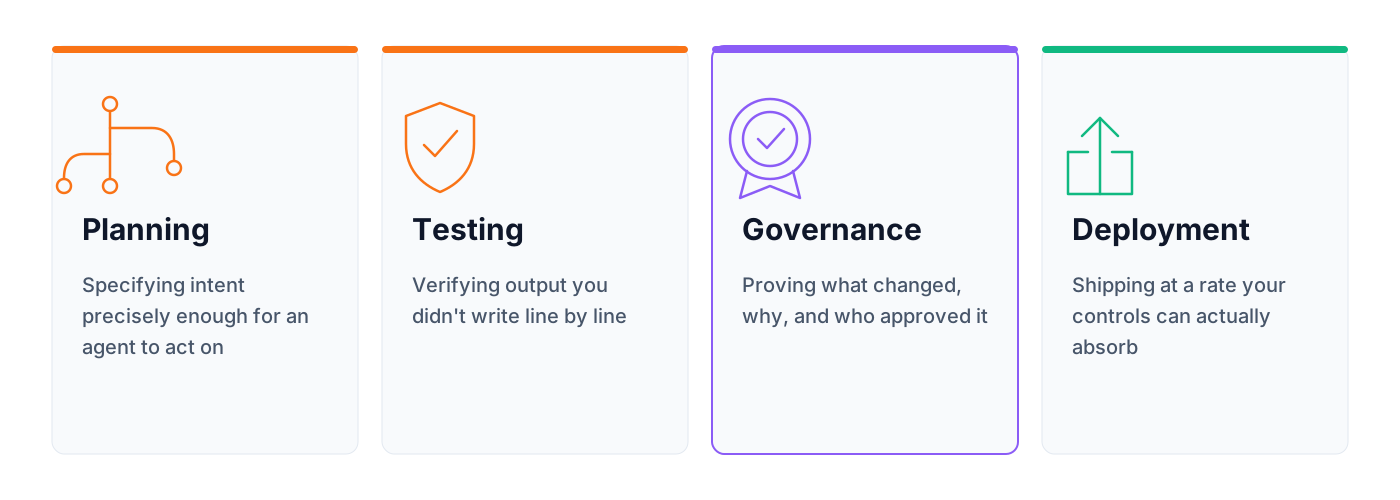
The playbook names six stages: plan, design, build, test, deploy, maintain. Four of them absorb most of the new pressure, and they are where an engineer’s day now actually goes.
Planning
Specification became the upstream constraint. Anthropic’s model is a chain of artifacts (intent, spec, plan, diff, review findings) where each stage commits something version-controlled that the next stage reads. Together they form the audit trail.
That chain punishes ambiguity in a new way. A vague ticket used to stall until someone asked a clarifying question in standup. Hand the same ticket to an agent and nobody asks. It executes the ambiguity at full speed, and the misreading surfaces in review, after the code exists and someone feels invested in it. Precision in the spec is now far cheaper than correction in the diff.
Testing and verification
The unit of work shifted from writing tests to designing verification. Agent sessions increasingly check their own output before a human sees it, which means the interesting question is no longer “did I write a test for this function” but “does my harness actually distinguish correct from plausible”.
Those differ more than they sound. Generated code tends to pass the tests it was shown, because those tests were in its context. Verification that only confirms a happy path the model already knew about tells you very little. Deciding what “correct” means for a change, then encoding that decision so it runs without you, is the skill that replaces test-writing volume.
Governance
Governance in an AI-native SDLC means four concrete things: knowing which code an agent produced (provenance), bounding what an agent may touch (permission boundaries), keeping a record of how a change was approved (audit trail), and enforcing policy inside the pipeline rather than in a meeting.
The GitLab research suggests most teams are behind on all four. 92% report some form of governance challenge with AI-generated code, and 80% agree their organisation adopted AI tools faster than it developed policies to govern them. A further 43% say they cannot reliably distinguish AI-generated code from human-written code in their own codebase — which makes provenance a data problem before it is a policy problem.
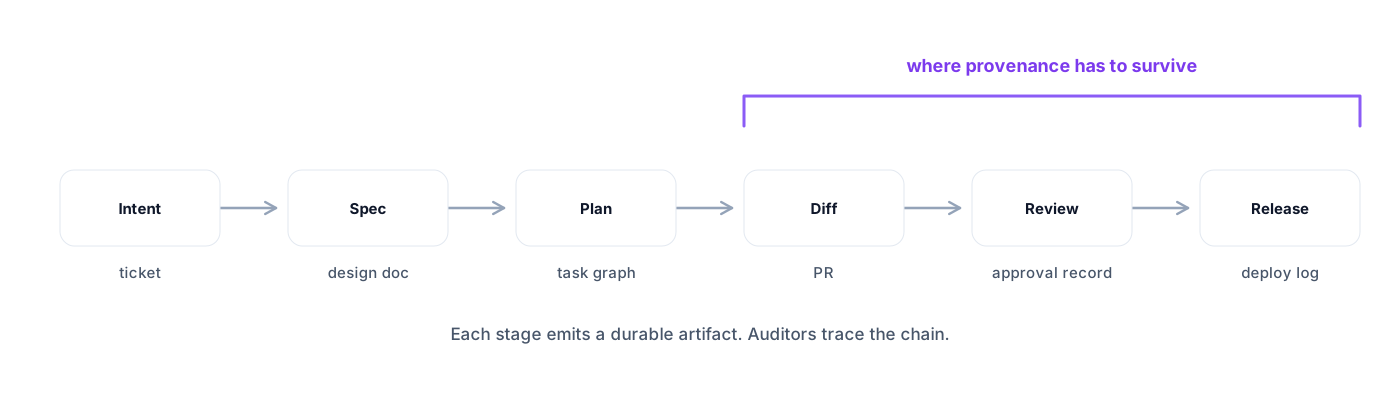
The shift that makes this an engineering skill rather than a compliance function is where the policy lives. Anthropic’s framing: the live policy is read and applied while the spec is written, instead of being discovered in a review weeks later. Policy that executes is code. Somebody has to write it, test it, and own it when it blocks a deploy at 11pm.
Deployment
Deployment gates were sized for the volume of change humans produce. That assumption broke. Anthropic states the consequence plainly: “Security teams are sized for human output, so when agents multiply code output, either the review queue builds or code ships under-reviewed.”
There is no third option available by working harder. The gate either scales, through automated policy checks, progressive delivery, and tighter blast-radius limits on what any single change can reach, or it becomes the queue where everything waits. Most teams pick the queue by default, then wonder why throughput never improved despite the tooling spend. AIOps in DevOps covers the operational side of that same load, and a phase-by-phase map of where AI lands in the DevOps lifecycle places deployment against the six other phases it competes with for the same engineering attention.
What this means for engineers in India
A large share of India’s engineering output ships under someone else’s contract. Services work and GCC work both come with client-defined review, approval and audit obligations, and those obligations were negotiated against an assumption about how much change a team produces in a sprint.
Raise code volume tenfold and the contractual gates are precisely what does not scale. A client’s change-approval process does not care that an agent wrote the diff. It cares whether the approval record exists.
That makes provenance and traceability billable competencies rather than internal hygiene. An engineer who can evidence how AI-generated code was reviewed, what it was permitted to touch, and who approved it is answering a question the client is already asking. In a services or GCC context, that is closer to the commercial centre of the work than most internal tooling skills ever get.
What to learn now
Four competencies, each checkable by whether you can do it on Monday:
- Writing specifications precise enough that an agent executing them literally produces what you meant.
- Building evaluation harnesses that catch plausible-but-wrong output, not just individual test cases.
- Implementing policy as code and permission boundaries inside the pipeline.
- Establishing provenance for generated code, so the audit trail exists before anyone asks for it.
These are system-level skills. The individual-career question, which abilities are appreciating and which are being repriced, is a different one, covered in our post on AI skills for software engineers.
Frequently asked questions
What is an AI-native SDLC?
An AI-native SDLC is a software development lifecycle redesigned around AI agents doing most code generation, so the process constraints move upstream and downstream of coding. Anthropic’s The AI-Native SDLC Playbook names six stages — plan, design, build, test, deploy, maintain — each committing a version-controlled artifact the next stage reads.
If AI writes the code, what do software engineers actually do?
Engineers specify, verify, govern and ship. GitLab’s AI Accountability Report found 85% of 1,528 surveyed developers and technology buyers agree the bottleneck moved from writing code to reviewing and validating it. The work becomes defining correct behaviour, designing verification, setting permission boundaries, and owning what reaches production.
What does governance mean in an AI-native SDLC?
Governance in an AI-native SDLC is an engineering discipline, not a compliance function: provenance, permission boundaries, audit trails, and policy written as code that runs in the pipeline instead of being raised in a review meeting. GitLab’s 2026 AI Accountability Report found 92% of respondents report a governance challenge with AI-generated code.